ServicesWell Water Treatment
Cudahy Well Water Treatment
Rusty rings in the toilet, a sulfur smell from the tap or sand in the aerators each tell you something about your well. We figure out what is going on, explain the fix in plain words and put in only the equipment your water actually needs.
What well water treatment means
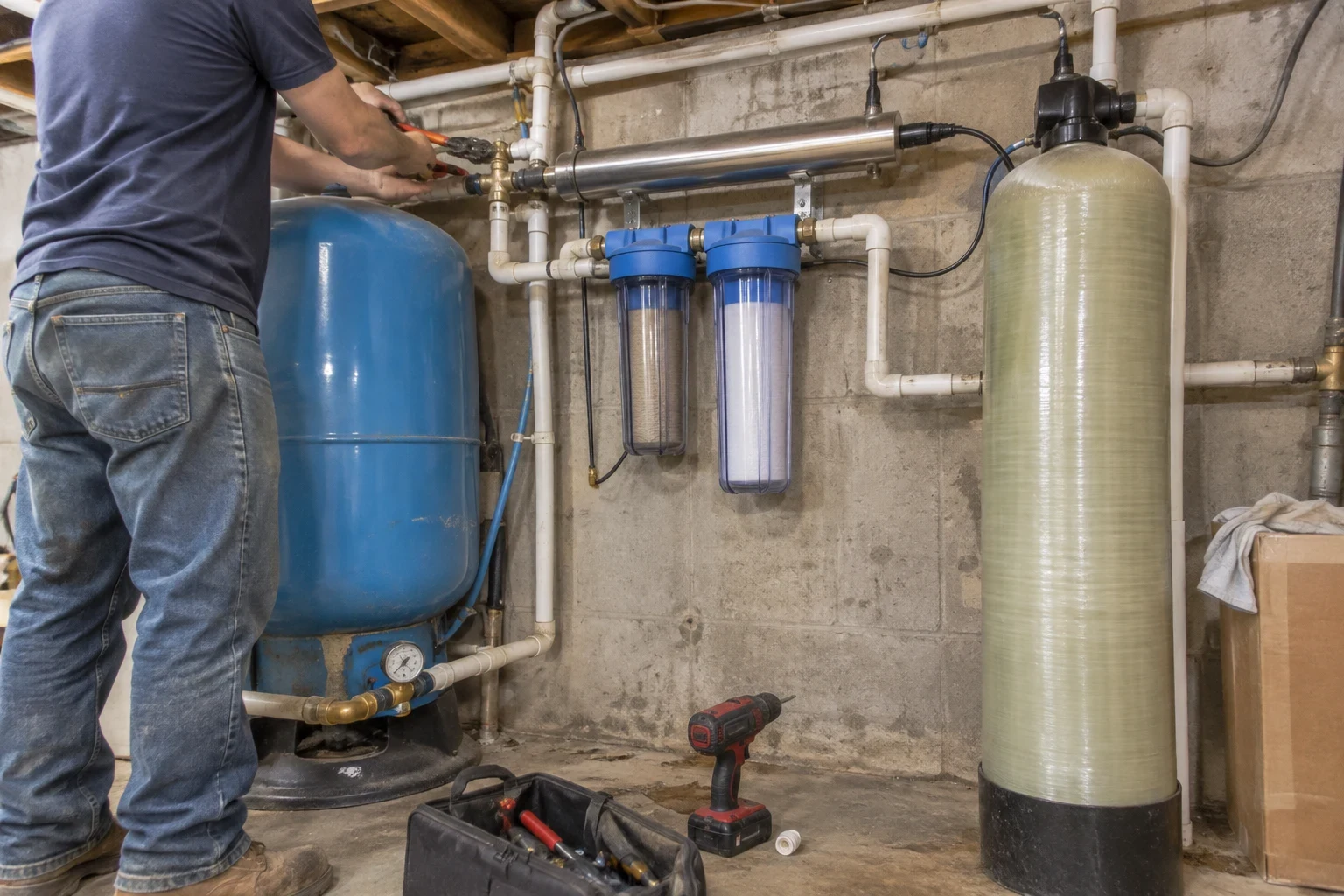
City water gets treated before it reaches you. Well water does not. Whatever the ground puts in it comes straight into your home. That can be iron, manganese, hardness minerals, sand or a sulfur smell. Often it is two or three of these at once.
There is no single box that fixes all of that. Each problem has its own fix, and the order matters. Sediment comes out first, then iron and smell, then hardness. Drinking water can get a last step at the kitchen sink. We walk you through each part in plain words so you know why it is there.
Many wells around the area carry hard water and iron together. That is common, and it is very treatable once you know what you are dealing with.
What we do on a well treatment job
- 01
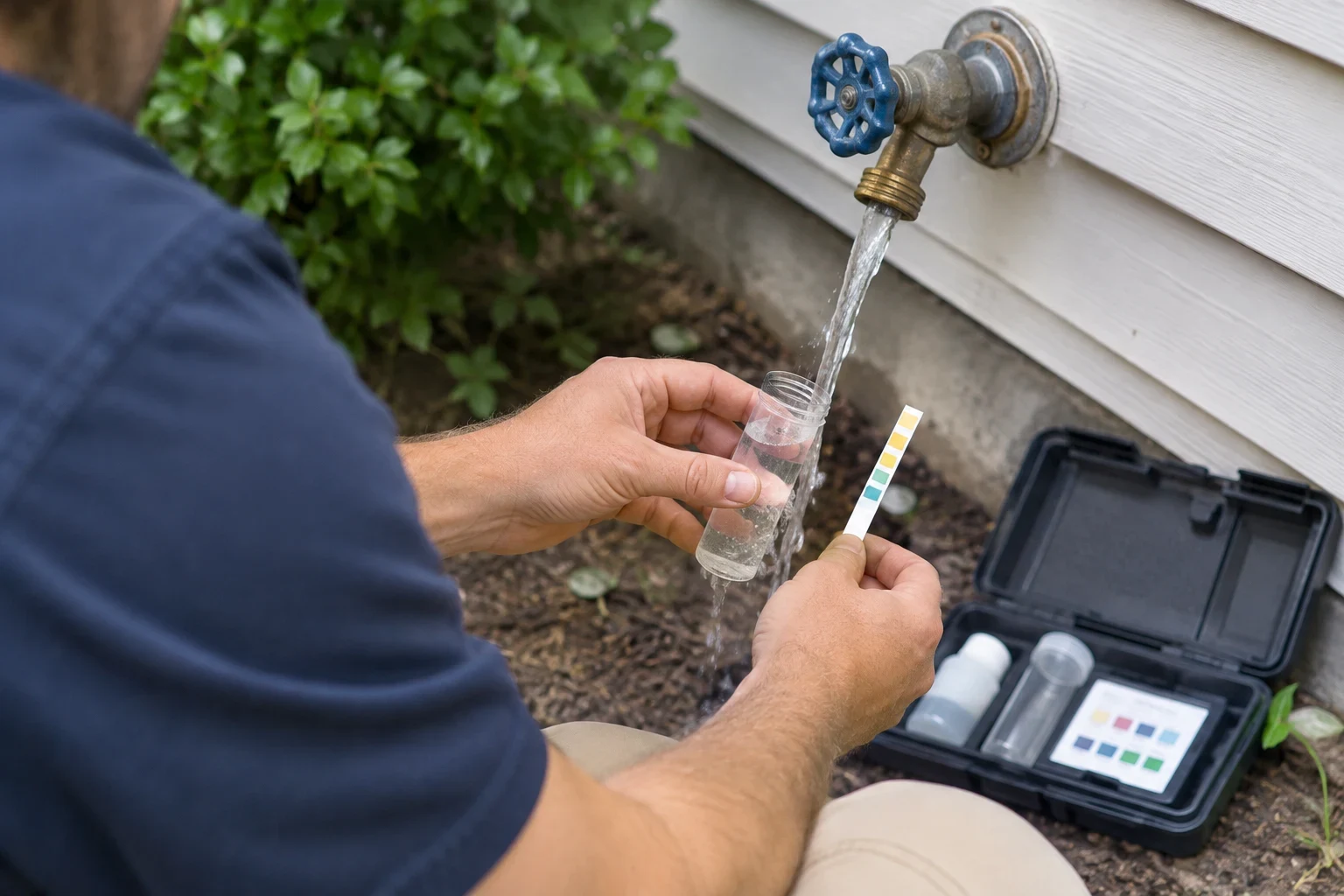
Checking your water and equipment
We ask what you notice and at which taps. Then we look at your pressure tank, your pipe size and the room you have to work with. If you have paperwork on your well water already, we go over it with you.
- 02
Sediment filter
This goes in just past the pressure tank and stops sand and grit. It keeps your fixtures and the rest of the treatment equipment from wearing out early.
- 03
Iron, manganese and sulfur filter
This filter changes dissolved iron and sulfur into solid bits, holds them in its media and flushes them down the drain on a schedule. That is what ends the orange and black stains and the rotten egg smell.
- 04
A softener if the water is hard
When hardness shows up too, the softener goes in after the iron filter. Our Water Softeners page explains it in more detail.
- 05
Cleaner water for drinking
Some families like an extra step for the water they cook with and drink. An under-sink unit, explained on our Reverse Osmosis page, covers that.
- 06
Startup and a quick lesson
We program the controls, look for leaks and show you where the bypass valve is and what to check through the year.
Questions about Well Water Treatment?
Call(414) 404-9788How to tell your well water needs help
Rust-colored marks
Orange rings in the toilet, streaks in the tub and tinted laundry usually come from iron. Bleach tends to set the stain deeper.
Dark specks on fixtures
Black or brown smudges often mean manganese. The water itself may look faintly tinted.
A sulfur smell
A rotten egg odor usually comes from hydrogen sulfide. When it shows up only on hot water, the water heater may be involved, and we look at that as well.
Sand in aerators
Grit plugging faucet aerators and the screens on your washer or dishwasher means sediment is making it past the well. Over time it wears down valves.
Crusty showerheads, cloudy glasses
White buildup on fixtures and spots left on dishes point to hard water.
What to expect from start to finish
- 1
A call and a free quote
Tell us what the water is doing. We ask a few things about your well and your home, then pick a time to come see your equipment.
- 2
A written plan
We go through each piece, what it pulls out of the water and why it sits where it does. Your quote stays good for 30 days, so there is no rush.
- 3
The day of the install
Nearly all the work is at the pressure tank. We turn off the water, plumb the equipment in with a bypass, run a line to the drain and fire it up. You will be without water for part of the day, and we let you know when.
- 4
Flushing and tidying up
We flush the pipes, set the cleaning and regeneration schedule, check every joint for drips and leave the area clean. Payment in full comes after the install is complete.
What sets the price of a well system
Every private well carries its own mix of minerals, so there is no standard price for treating one. Your quote comes down to what needs to come out of the water and how your home is plumbed. We break the quote into parts so you can see what each piece costs and why it is there.
- The mix in your water
- Sand and grit alone take one filter. Add iron, sulfur and hardness, and you need more stages and more equipment.
- Iron and sulfur levels
- Heavy iron or a strong smell calls for a bigger filter, or a different kind, so it can keep up and not let stains through.
- Pump flow and family size
- We match the equipment to what your well pump puts out and how much water your family runs. Gear that is too small lets problems slip past.
- Room and plumbing
- How much space sits near the pressure tank, where the nearest drain is and whether old equipment has to be pulled out all change the labor.
- Optional add-ons
- A drinking water unit under the kitchen sink is your call. Pairing new treatment with a softener you already own is too.
Common questions about treating well water
Can one tank take care of iron, smell and hard water?
Most of the time, no. Iron and sulfur are handled by an oxidizing filter, and hardness is handled by a softener. A softener can deal with a small amount of iron, but heavier iron clogs the resin and shortens its life. We tell you which combination suits your water and explain the reason.
Will my water pressure drop after treatment goes in?
It should not drop in a way you notice if the system is sized right. Weak pressure after an install usually traces back to equipment that is too small or a sediment cartridge that is packed full. We size each piece to your pump flow.
What maintenance does a well system need?
Swap the sediment cartridge when it fills up. Keep salt in the softener if you have one. The iron filter cleans itself on a set schedule by flushing to the drain. We show you what to look at and how often.
Is there a way to pay over time?
There is. The lender we work with is U.S. Bank Avvance, and approval depends on your credit. Ask about it when you call and we will walk you through the basics.
Can I back out once the paperwork is signed?
Yes. Once you sign, you still have three business days to cancel. Payment is not due until the install is done.
Do you treat wells beyond Cudahy?
We do. We work with homeowners on private wells in nearby places like Franklin and Oak Creek. Let us know where you are when you call.
Tell us what your well water is doing
Describe the stains, smell or grit and we will explain what is likely causing it. You get a free quote and financing details on the same call.