Cudahy, WI
Cudahy Water Softeners and Filters, With Every Option Spelled Out
We install water softeners, under-sink reverse osmosis, whole-home filtration and well water treatment in Cudahy and nearby towns like St. Francis and South Milwaukee. Before you pick anything, we tell you what each system does, what it won't do and what it costs to keep running.
- Licensed Wisconsin plumber installs
- 1-yr RO warranty, filters excluded
- 1-yr labor on original install
- Free quote by phone
What We Install in Your Home
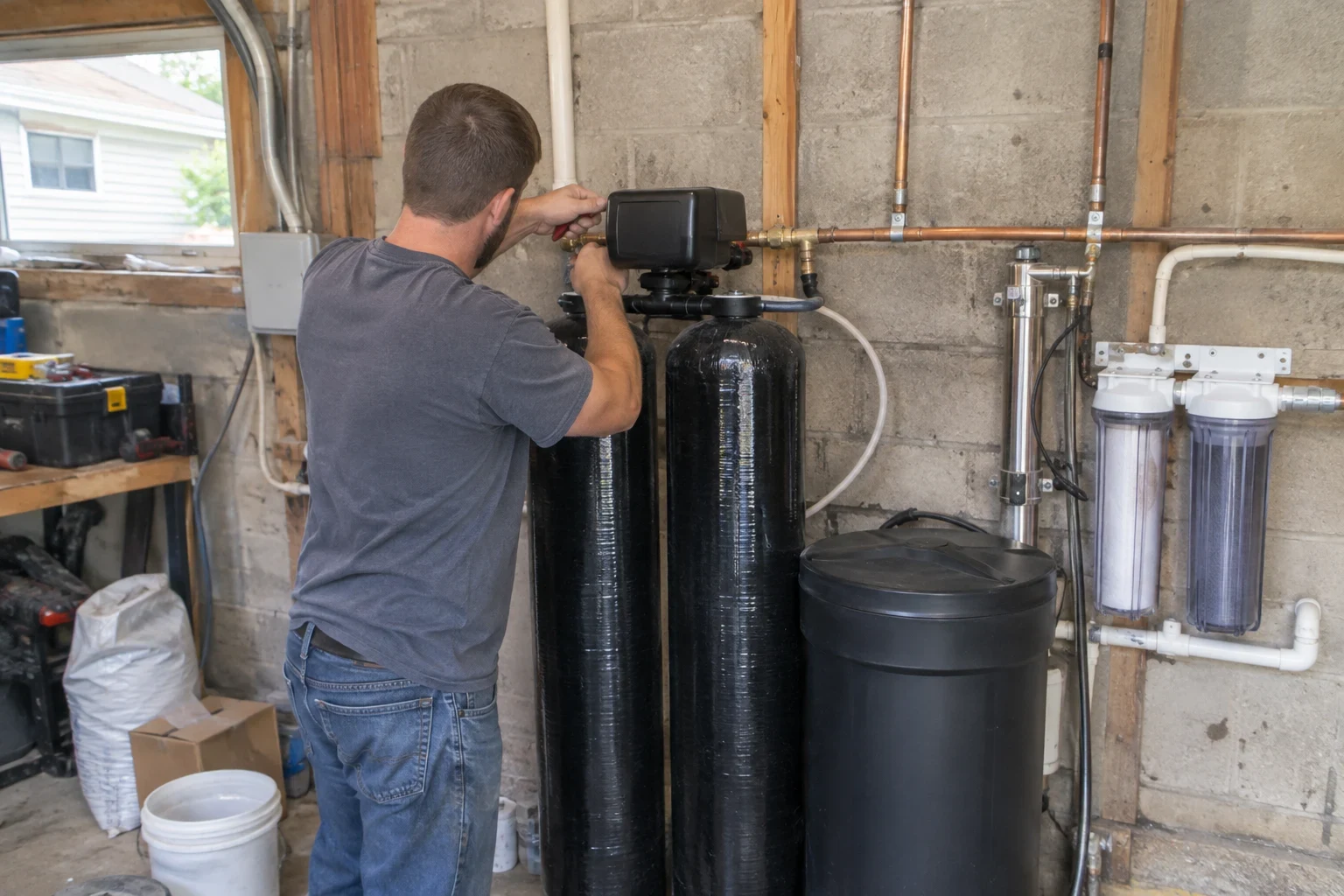
We put in four kinds of systems: water softeners, reverse osmosis, whole-home filtration and well water treatment. Each one is installed by a licensed Wisconsin plumber. The RO unit is covered for 1 year, with filters excluded, and the original install carries a 1-year labor warranty.
Water Softeners
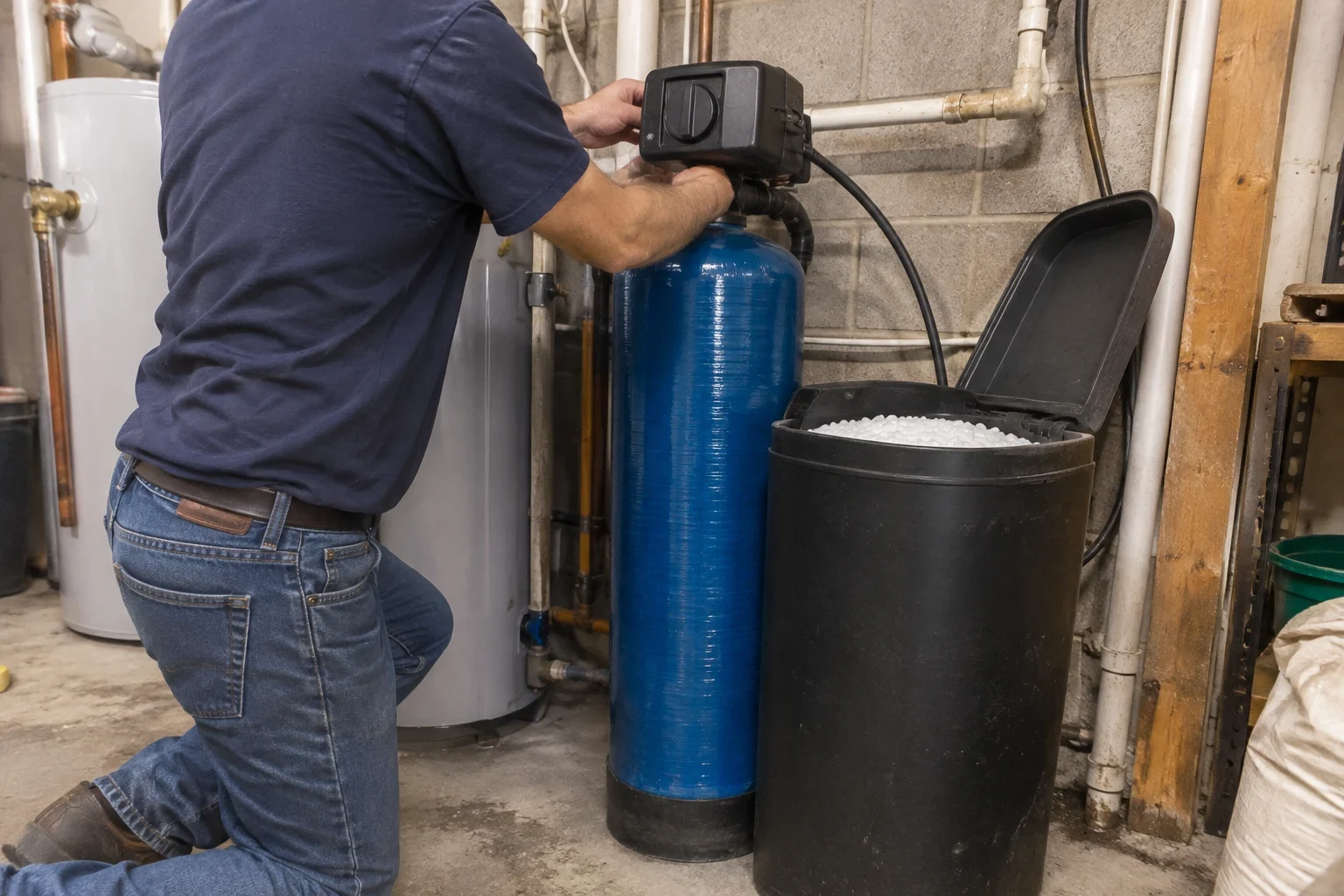
Softeners sized to your water and your household, installed with a bypass valve and a proper drain, and explained so you know how to run it.
Reverse Osmosis
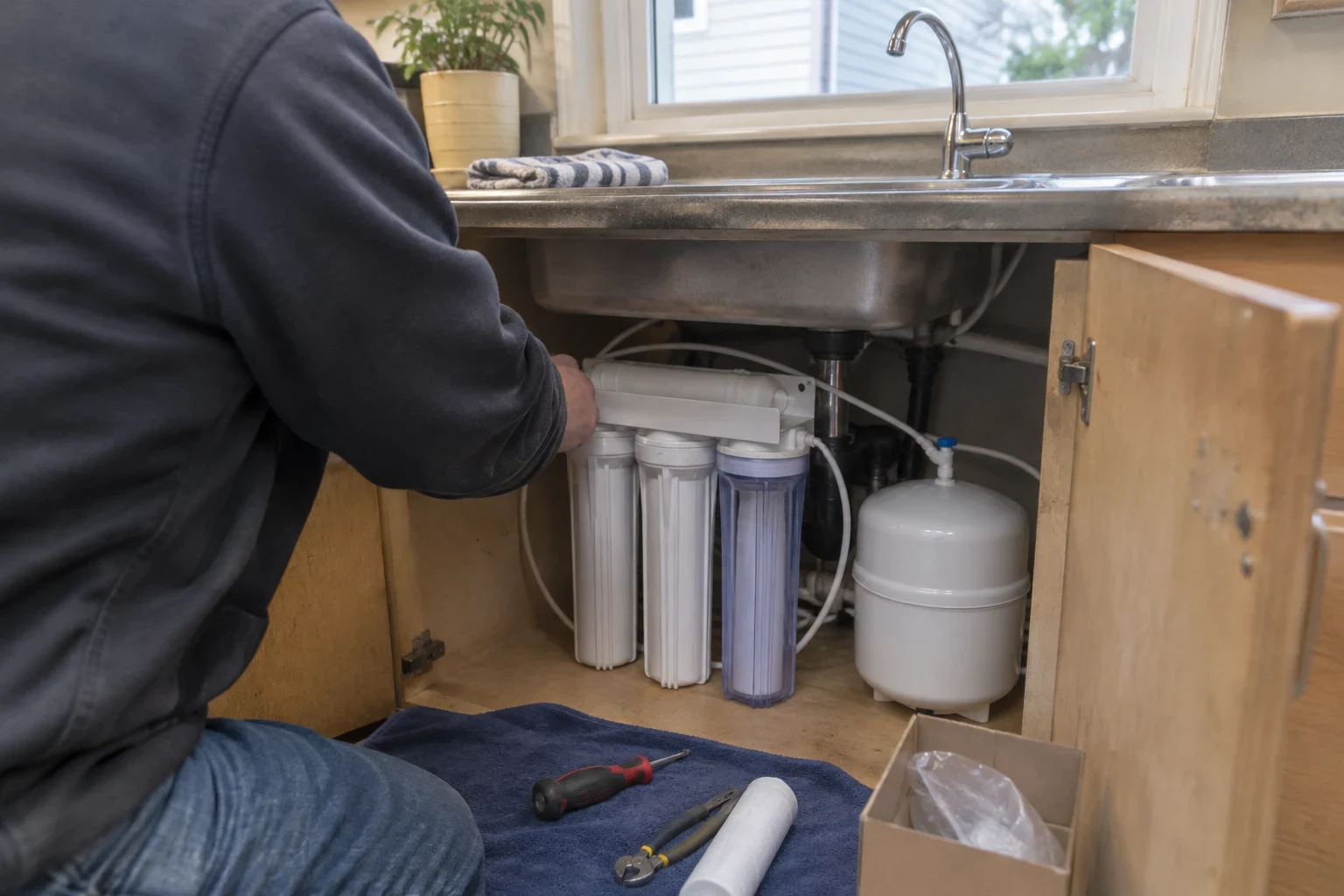
An under-sink reverse osmosis system gives you filtered water for drinking and cooking from its own faucet, so you can stop hauling bottled water home.
Whole-Home Filtration
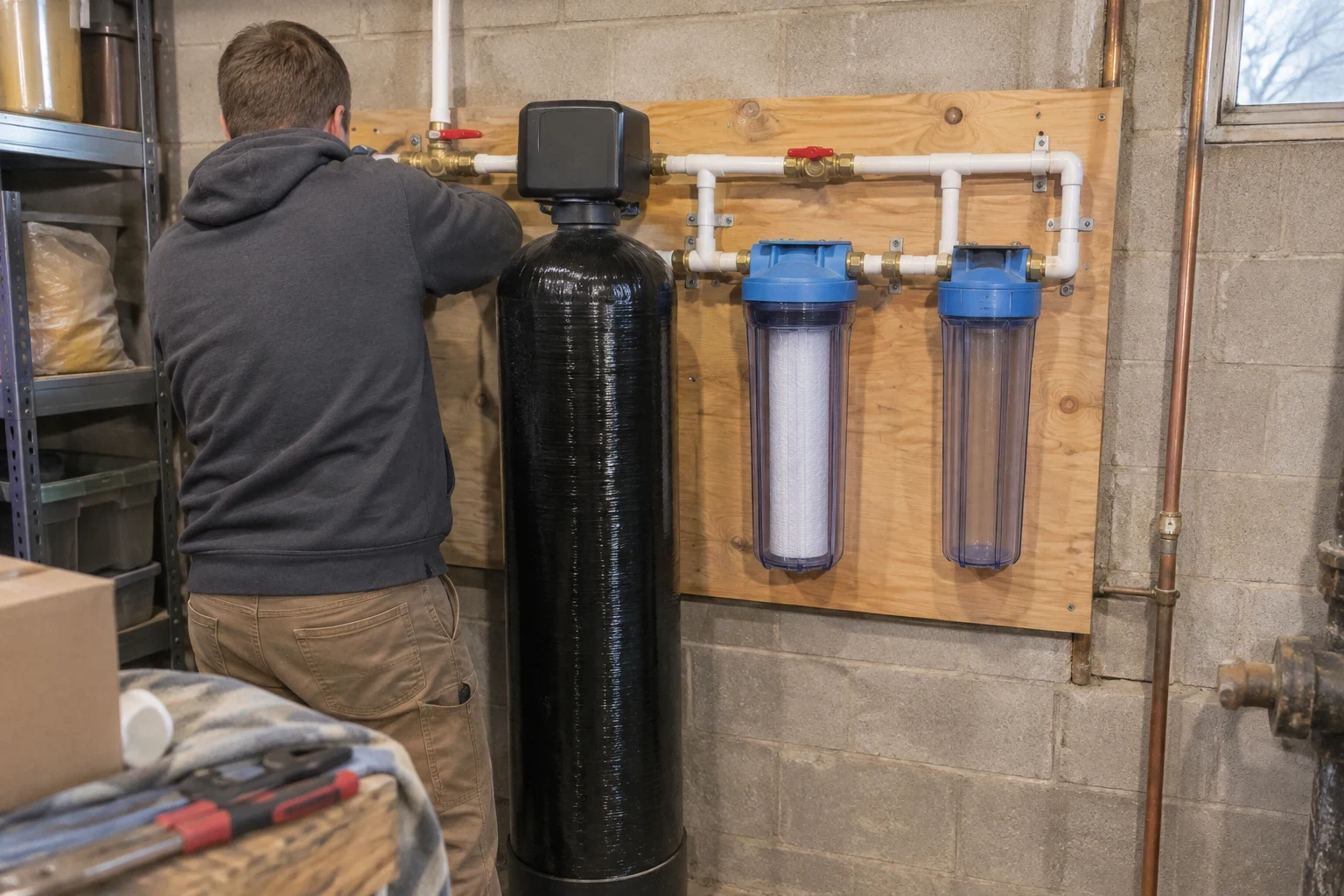
One carbon filter where the water line enters your home, so every tap, shower and appliance gets water without the chlorine taste or smell.
Well Water Treatment
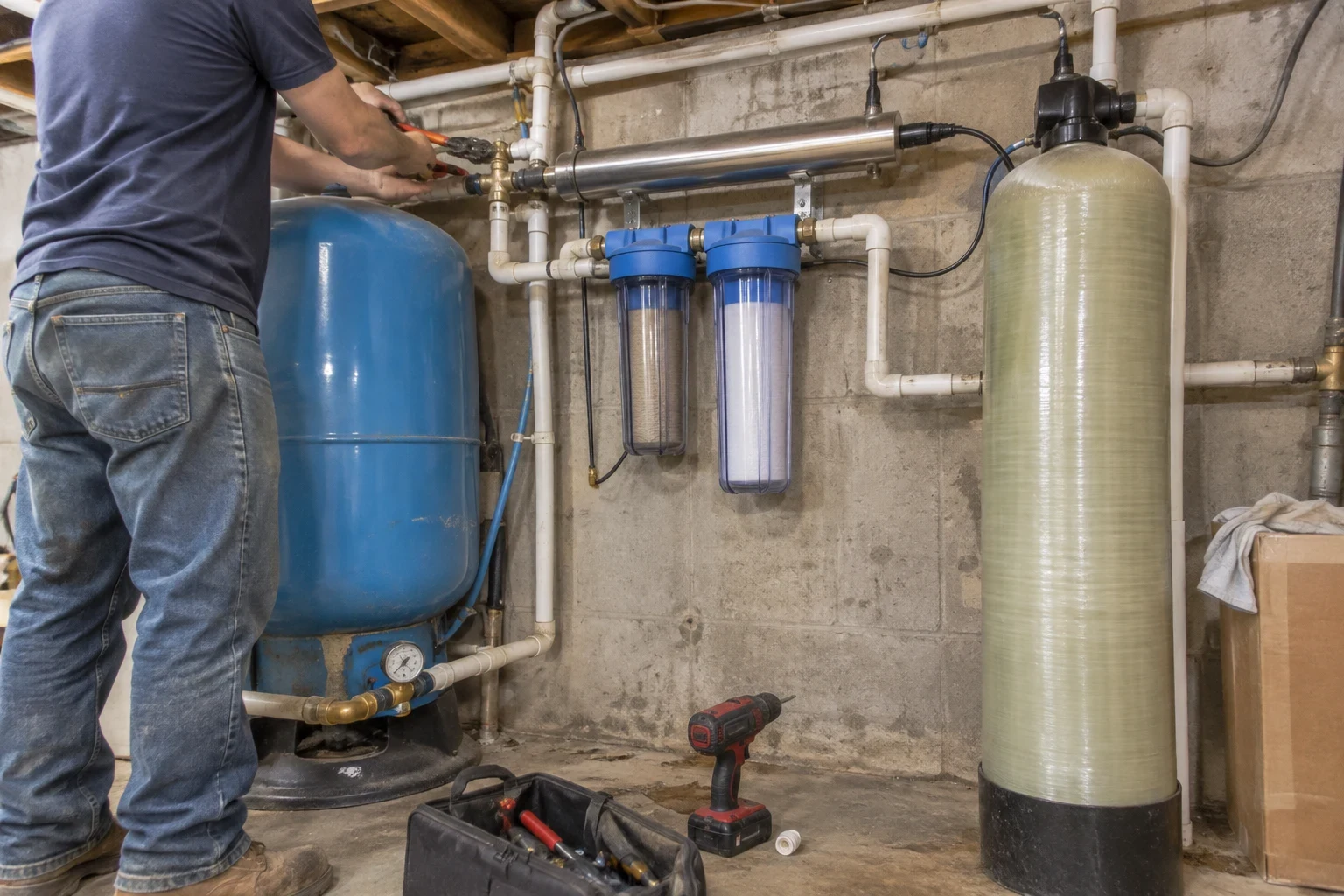
Treatment for private wells with iron, sulfur smell, sediment or hard water, with each piece of equipment explained before you decide.
Where We Work
We're based in Cudahy and install systems in homes across the south side of the Milwaukee area. That includes St. Francis, South Milwaukee, Oak Creek, Milwaukee and West Milwaukee. We also work in West Allis, Greenfield, Greendale, Hales Corners and Franklin.
- Cudahy
- St. Francis
- Oak Creek
- South Milwaukee
- Milwaukee
- West Allis
- Greenfield
- Franklin
- Greendale
- Hales Corners
- West Milwaukee
Not sure if your street is on our list? Ask when you call for your quote, and we'll tell you straight.
What Moves the Price
No two installs cost the same, and we'd rather show you why than hand you a number with no explanation. These are the things that change a quote the most. We go over each one with you before you decide.
Your quote is free and starts with a phone call. If we need to see the space or the pipes first, we'll set a time that works for you.
- Which system you choose
- An under-sink RO unit is a smaller job than a softener on your main line. A whole-home filter sits somewhere in between. Pairing two systems adds parts and time.
- Your plumbing and the space
- Copper is simple to cut into. Older galvanized pipe can need extra fittings or a short section replaced. A floor drain and an outlet close to the install spot keep the work shorter.
- What's in your water
- City water with chlorine taste needs different media than a private well with iron or a sulfur smell. Well systems often need more than one stage.
- Size of your household
- A softener or whole-home filter has to keep up with how much water your home uses on a busy morning. A family of five needs more capacity than a couple, and capacity affects the price.
- Upkeep over the years
- Softeners use salt. Carbon and sediment filters need new cartridges. RO units need prefilter changes and, less often, a new membrane. We tell you what those cost before you buy, so the first year has no surprises.
How We Work With You
Plenty of people call us after reading a pile of websites that left them more confused than before. We start by sorting out what your water is actually doing.
Each option in everyday words
A softener swaps out the calcium and magnesium that leave scale for sodium or potassium. A carbon filter takes out chlorine taste and smell. A reverse osmosis unit pushes drinking water through a fine membrane at one tap. We tell you which one matches the problem you described, and which ones don't.
No more equipment than you need
If a carbon filter fixes the taste, we won't push a softener on top of it. If a softener alone clears the spots on your dishes, you'll hear that. Sometimes the right answer is one small unit under the sink.
A quote you can read
Your quote lists the equipment, the parts and the labor line by line. It stays good for 30 days, so there's no rush to decide. Once you sign, you still get three business days to cancel.
The bill comes after the work
We collect full payment once the install is finished and the system is running. Nothing is owed up front. If spreading the cost over time helps, ask about financing through U.S. Bank Avvance, on approved credit.
Your basement left clean
We lay covers down in the work area and haul out the old parts and empty boxes. Before we pack up, we show you where the bypass valve is and how to shut the system off yourself.
A Small Water Treatment Company in Cudahy
We do one thing: put water treatment equipment into homes and explain it well enough that you could tell a neighbor how it works. Water softeners, reverse osmosis, whole-home filtration and well water treatment. That's the whole list.
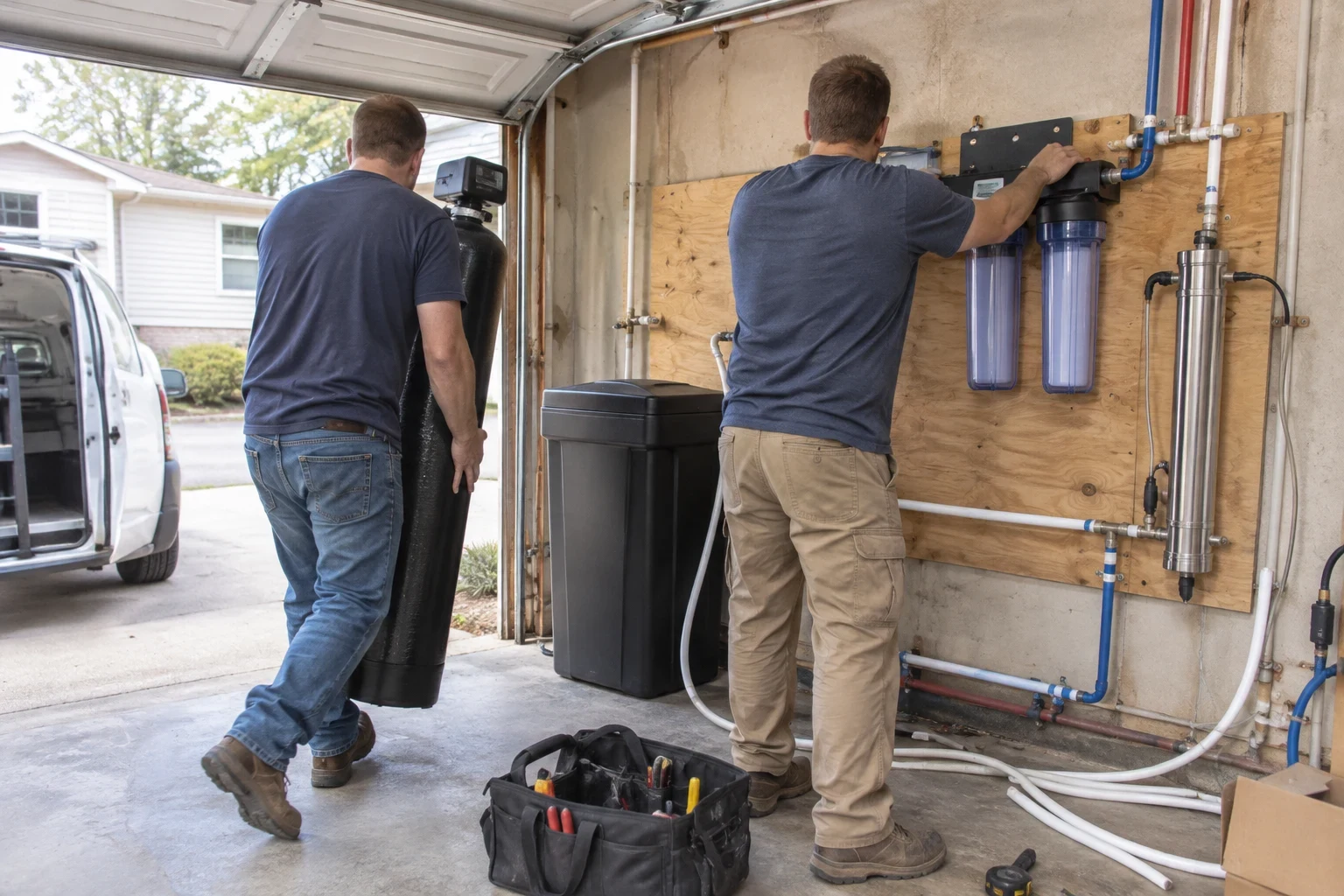
Most homes around here have the water main coming in through the basement, often near the water heater, and that's where we spend most of our day. We work neat, we answer the same question twice without sighing, and we tell you plainly when a cheaper fix will do.
- License
- Installed by a licensed Wisconsin plumber
- Warranty
- 1 year on the RO unit, filters excluded; 1 year labor warranty on the original install
From Your First Call to a Finished Install
A typical install fits inside part of a single day. These are the steps, start to finish.
- 1
You call and describe the problem
Tell us what you're seeing: scale on faucets, dry skin, a chlorine smell, orange stains, a rotten-egg odor. If you have a water report from your utility or recent lab results from your well, have them handy.
- 2
We talk through the options
We explain what would fix it and what each choice means for cost and upkeep. Then you get your quote, listed part by part.
- 3
Install day
We shut off the water, put in a bypass so you can isolate the system later, and plumb in the new unit. Softeners and RO units also get a drain line run to code.
- 4
Walkthrough and payment
Once the water is back on, we check every joint for leaks and show you how the system works. You pay after the install is complete, and you keep a simple upkeep schedule for your system.
Questions People Ask Us
How do I know if I need a water softener?
Look for white crust on faucets and showerheads, spots on glasses after the dishwasher, or soap that won't lather well. Those are signs of hard water. Your water utility also publishes a yearly water quality report that lists hardness. If your problem is taste or smell instead, a softener won't fix it, and we'll tell you that.
What's the difference between a softener and a filter?
A softener removes the minerals that cause scale. It does not take out chlorine or improve taste. A carbon filter does the opposite job: it handles chlorine taste and odor but leaves hardness alone. Some homes need one, some need both.
What does reverse osmosis do, and does it waste water?
An RO unit sits under your kitchen sink and pushes water through a very fine membrane, giving you a separate faucet for drinking and cooking. It's a good choice if you have older plumbing and worry about lead, or you just want cleaner-tasting water. It does send some water down the drain while it filters. We'll explain how much and size the tank for your use.
What warranty comes with the equipment?
There is lifetime coverage on tanks, valve ceramic discs and dry mechanical parts. We'll go over what that covers on the specific system you pick before you sign.
Can I finance a system?
Yes. One option is financing through U.S. Bank Avvance, on approved credit. Bring it up when you call and we'll walk you through the basics. If you'd rather pay outright, full payment is due when the install is done.
How long is my quote good for, and can I change my mind?
Your quote holds for 30 days. After you sign, you have three business days to cancel. Take the time you need.
I'm on a private well. Can you help?
Yes. Well water often needs more than one stage, such as a sediment filter for grit and a system for iron or a sulfur smell. If you have recent lab results for your well, share them when you call so we can talk about the right setup.
How much upkeep will this take?
A softener needs salt added every few weeks, depending on your use. Filters need new cartridges on a set schedule, and RO units need prefilters changed and a membrane now and then. We write down the schedule for your system before we leave.
Talk It Over Before You Buy Anything
Tell us what your water is doing and we'll explain what would fix it. You'll get a free quote and financing information if you want it.