ServicesReverse Osmosis
Reverse Osmosis in Cudahy
Reverse osmosis pushes your water through a very fine membrane and sends it to a small faucet at your kitchen sink. It is for the water you drink and cook with. We explain how it works, what it removes and what it costs before you decide.
What Reverse Osmosis Does, in Plain English
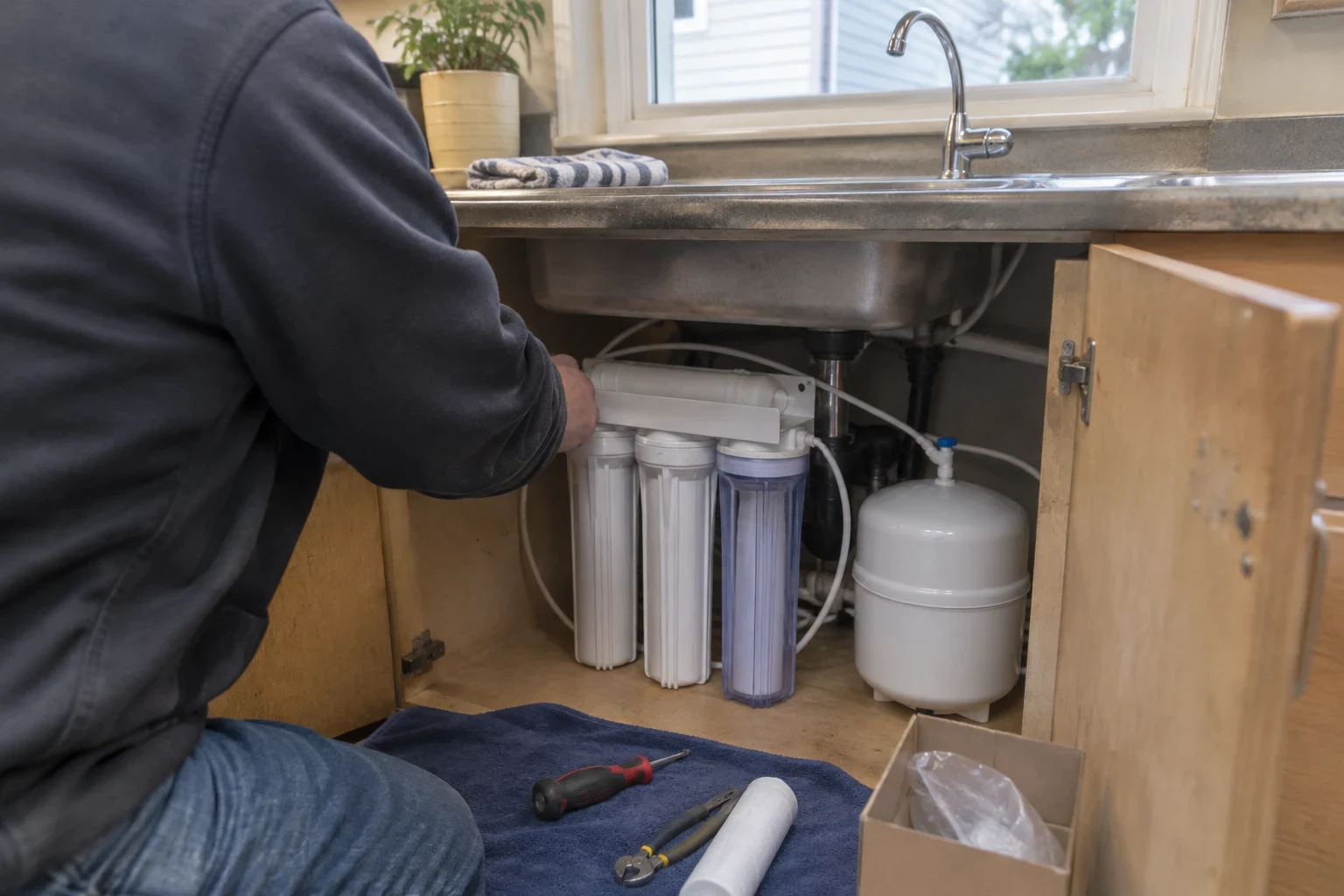
An RO system sits under your kitchen sink. Water runs through a sediment filter, then a carbon filter, then the RO membrane, then a final polishing filter. The membrane lets water through and holds back most of what is dissolved in it, like lead, nitrates, salts and many trace chemicals. What it holds back gets rinsed down the drain.
It does not treat the whole house. Your shower, laundry and outside taps stay the same. That is the point. You get very clean water where you actually drink it, without paying to filter the water you flush. If your concern is chlorine smell in the shower or hard water spots on fixtures, our Whole-Home Filtration or Water Softeners pages are the better place to start.
Many older homes around Cudahy still have original plumbing, and RO is a sensible extra step for drinking water in a house like that. We will tell you straight if it fits your situation or if something else makes more sense.
What Comes With an RO Install
- The filter system
- A multi-stage unit mounted under the sink, with prefilters, the membrane and a final carbon filter. We size it to your cabinet and to how much water your family drinks.
- A dedicated faucet
- RO water comes out of its own small faucet next to your main one. A spare sprayer or soap dispenser hole often works for it. If there is none, we drill the countertop.
- Drain and supply connections
- We tap the cold water line and connect the reject line to your sink drain the right way, so it drains cleanly and does not back up into the system.
- Filtered water at the refrigerator
- Want the dispenser and ice maker on RO water too? We can run tubing from the system over to your fridge, so the ice comes out clearer.
- A walkthrough before we leave
- We show you where the shutoff is, which filter is which and how to tell when they need changing. You will know your own system.
When an Under-Sink RO System Is Worth It
Cases of water in the cart
If a case or two of bottled water goes in the cart every grocery run, that adds up in cost and pantry space. An RO faucet at the sink gives you drinking water just as good from your own tap. The empty plastic stops filling the recycling bin.
Original pipes in an older house
Lead can get into water from old pipes and solder after it leaves the main. RO is one of the few home systems that reliably cuts lead at the faucet you drink from.
A taste that puts you off
When water tastes like chlorine or metal, people tend to drink less of it. RO water usually comes out clean and neutral, and your coffee and tea taste better for it.
Crusty kettles and cloudy cubes
White scale inside the kettle and cloudy ice are dissolved minerals showing up. RO pulls most of those out of the water you drink and cook with.
Wanting one more layer
Some folks just want something extra between the water main and the glass on the table. That is a good enough reason, and RO handles it well.
What Moves the Price
Most RO installs look alike, but a few choices change the total. We spell out each one on your quote so you can see what you are paying for. Your quote holds for 30 days, and financing is available through U.S. Bank Avvance, on approved credit.
Tank or tankless
A tank system stores filtered water and costs less up front. A tankless unit frees up cabinet space and fills a glass faster. It costs more and needs an electrical outlet under the sink.
Your countertop
Laminate drills quickly. Granite, quartz and other stone take special bits and more time. If there is already an unused hole, we skip the drilling and the cost that comes with it.
Running water to the fridge
Sending RO water to your refrigerator means more tubing, more fittings and more labor. A long path, or one that runs through cabinets or a wall, adds to that.
Add-on stages
A remineralizing stage returns a small amount of calcium and magnesium for taste. Some people want it. Plenty of others are happy without it.
How Install Day Goes
- 1
A phone call first
You tell us about your sink, your countertop and what bothers you about your water. We give you a free quote and answer questions about options and financing.
- 2
We check the space
On the day, we look under the sink for room, the drain setup and the cold line. We clear the cabinet and lay down a mat so nothing gets wet.
- 3
Mount and connect
We mount the unit and the tank if there is one, set the faucet, and make the supply and drain connections. Most installs take a few hours.
- 4
Flush and leak check
New filters and membranes need to be flushed before you drink from them. We run the system, check every fitting for drips and clean up.
- 5
Pay when it is done
You pay in full once the install is finished and working. Not before.
Reverse Osmosis Questions We Hear
Does reverse osmosis waste water?
Yes, some. The system sends a stream to the drain to keep the membrane clean, and that is how RO works. Newer units send far less down the drain than older ones did. We can go over the more efficient models when we put your quote together.
Will RO water taste flat?
It can taste lighter than what comes out of the tap. Most people stop noticing after a few days. If you miss the flavor, a remineralizing stage puts a little back.
How long do the filters last?
Plan on swapping the prefilters about once or twice a year. The membrane goes a few years before it needs replacing. Heavy use or harder water shortens both. Before we leave, we show you how to do the swap yourself.
Will it fit under my sink?
In most kitchens, yes. A garbage disposal plus a cabinet full of cleaning supplies can make it tight, so we look at the space first. For cramped cabinets, a tankless unit usually solves it.
Do I need a softener with RO?
Not always. Hard water can wear out a membrane sooner, so in a hard water home a softener helps the RO system last longer. We will give you a straight answer on whether it is worth it for your house.
Ready for Better Drinking Water?
Give us a call and walk us through your sink setup and what bugs you about your tap water. We will lay out the options in everyday words and put a number on it. After you sign, you still have three business days to cancel.