ServicesWater Softeners
Water Softeners in Cudahy
Hard water shows up as chalky rings around the tap, cloudy glasses out of the dishwasher and mineral buildup in the bottom of your water heater. We install softeners sized to your home and the water you use, then show you how to run it so salt and settings make sense.
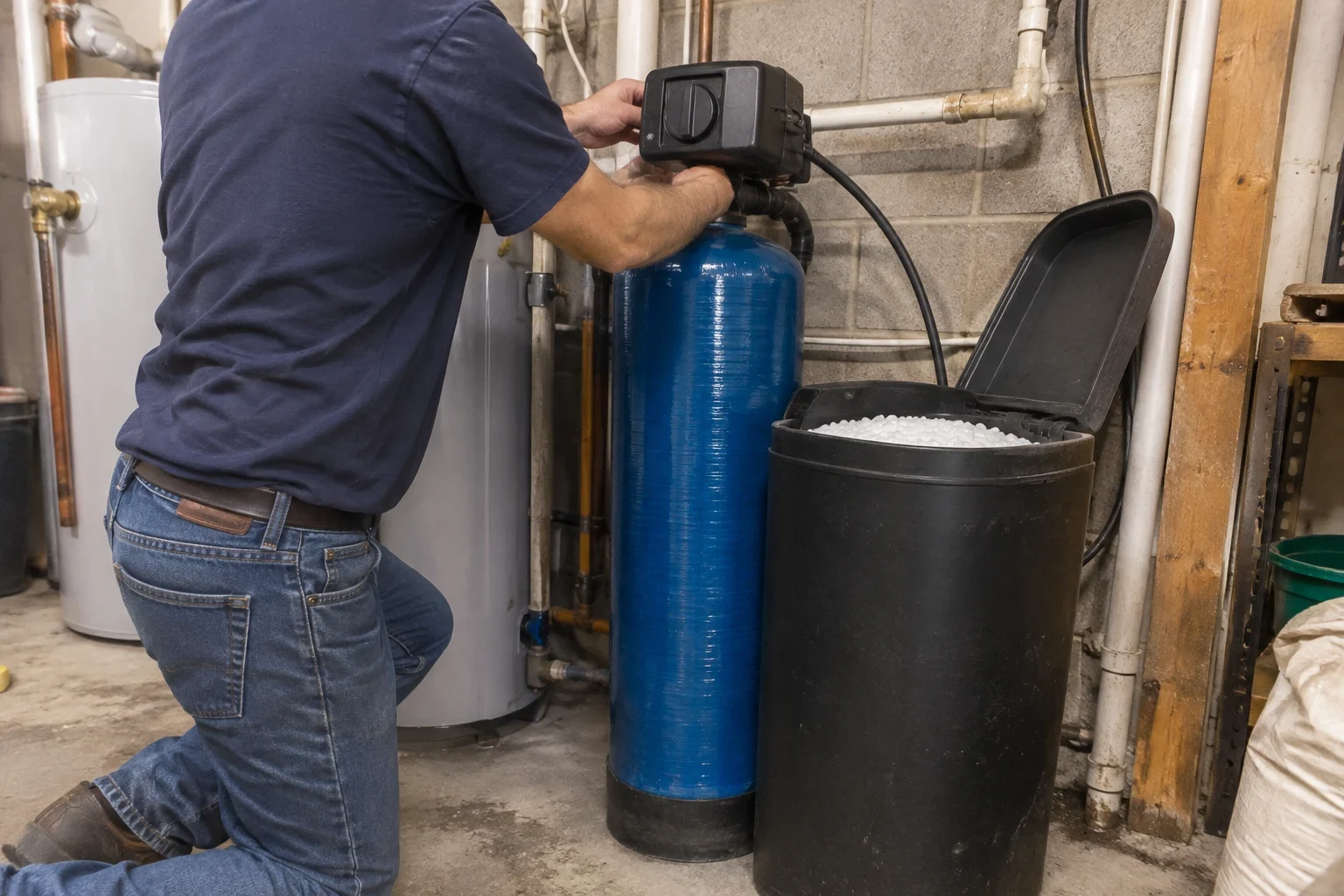
What a softener does, and what it doesn't
Hard water carries dissolved calcium and magnesium. A softener swaps those minerals out using a tank of resin beads. When the beads fill up, the unit rinses them with salty water from the brine tank, flushes that to the drain and starts over. That rinse is called regeneration.
A softener fixes scale and soap problems. It does not take out chlorine taste, and it is not a drinking water filter. If taste is your main complaint, whole-home filtration is the better fit. If you want cleaner water at the kitchen tap, look at reverse osmosis. We will tell you which one solves your problem, even if the answer is not a softener.
Lake water around Cudahy is moderately hard, and private wells nearby often run much harder. Either way, the right size comes from your hardness number and your household, not a guess.
What comes with a softener install
- Sizing to your water
- We size the unit from your hardness, iron if you're on a well, and how many people live in the house. Too small and it regenerates constantly. Too big and the resin can sit idle and channel.
- Metered valve
- We set up a control valve that regenerates based on the water you actually use, not just the calendar. That saves salt and water compared with an old timer unit.
- Bypass valve
- Every install gets a bypass. If you ever need to shut the softener off for service, you flip one handle and still have water in the house.
- Proper drain line
- The drain line goes to a floor drain or standpipe. We leave a gap of open air above the drain, which means wastewater has no path back into the softener.
- Setup and first fill
- We load the brine tank, program hardness and capacity, and run a regeneration before we leave. You get a quick walkthrough of the settings and the salt routine.
- Old unit removal
- If you're replacing a worn-out softener, we disconnect it and haul it away.
When hard water is the problem
Chalky rings at the tap
A pale, crusty ring builds up where faucets meet the sink, on showerheads and around the toilet base. That's mineral scale, and scrubbing only buys you a week or two.
Spotty dishes and glasses
Cloudy film on glassware after the dishwasher is a classic hard water sign.
Soap that won't lather
Calcium and magnesium keep soap from foaming up. So the shampoo bottle and detergent jug empty faster, and there's still a sticky feel on your skin and a ring in the tub.
Water heater noise
Popping or rumbling from a tank water heater often means scale on the bottom. Scale makes the heater work harder and wears it out sooner.
Stiff, dull laundry
Minerals stay in the fabric, so towels feel scratchy and colors fade faster.
An old softener that quit
If the salt level never drops or the hard water signs are back, the unit may be failing. Sometimes a valve repair is enough, and we will say so.
What moves the price
We don't price a softener until we've seen where it's going and what it connects to. A few things make most of the difference. Financing is available through U.S. Bank Avvance, on approved credit, and you have three business days to cancel after you sign.
Your hardness and how many live there
The harder the water and the bigger the family, the more resin the tank has to hold. More capacity costs more at the start, but the unit regenerates less often and uses less salt per gallon treated.
Existing plumbing
Many homes already have a softener loop. If yours doesn't, we have to run new piping to the main, which adds time and parts.
Drain access
A floor drain right next to the unit is simple. A long run or a new standpipe adds labor.
Well water extras
Iron, sulfur smell or sediment from a well can call for more than a softener. Our well water treatment page covers those options.
Removing an old unit
Pulling out and hauling away an existing softener adds a little to the job.
How the job goes
- 1
The phone call
Let us know what's bugging you about your water, and whether you're on a municipal line or your own well. Then we pick a time to come look at your setup and put together a free quote.
- 2
The visit and quote
We look at where the water comes in, the existing plumbing, and the drain. You get a written quote that lists the unit, the parts and the labor. It holds for 30 days, so there is no rush.
- 3
Install day
We shut the water off, cut in the bypass and softener near the main, run the drain line and load salt. Most installs take a few hours. We protect the floor and clean up when we're done.
- 4
Walkthrough
We show you the bypass, how to check salt, and what the display means. You pay in full once the install is finished and working.
Softener questions we hear a lot
How often will I need to add salt?
Take a look in the brine tank about once a month. Most families end up pouring in a bag or two when the level drops. Try to keep salt sitting a few inches higher than the water inside. Clean pellets give you less trouble than rock salt, which tends to leave sludge in the bottom.
Is softened water safe to drink?
Yes, for most people. The softener adds a small amount of sodium. If you are watching sodium, you can use potassium chloride instead of salt, or add reverse osmosis at the kitchen sink.
Will a softener get rid of chlorine taste?
It won't. Softening targets calcium, magnesium and a little iron, and that's about it. Carbon is what pulls out chlorine taste and smell, so whole-home filtration is the tool for that job. The two can sit side by side on the same line.
Can you reuse my old softener loop?
Usually, yes. If the loop is in good shape and close to a drain, we connect the new unit to it. If the piping is corroded or poorly placed, we will show you and explain the fix before doing anything.
How long does a softener last?
A good unit commonly runs well for many years. The resin wears out slowest when the softener is sized right and the salt stays clean. The control valve is the part most likely to need service over time.
Ready to deal with the scale?
Tell us about your water and your setup. We'll explain your options, give you a free quote and walk you through financing if you want it.